Three receptors.
New questions.
Early evidence.
A closer look at Marathe and colleagues’ 2025 mouse study of retatrutide and tumour progression.
Explore the findingsInteresting findings. Important boundaries.
Research can open a new question without settling what treatment works for a person. This page keeps the experiment, its interpretation and the supplier catalogue separate.
The study at a glance
Marathe et al., published 14 March 2025 in npj Metabolic Health and Disease, investigated retatrutide in obese mice with implanted pancreatic or lung cancer cells. Retatrutide activates GLP-1, GIP and glucagon receptors.
Pancreatic model
The authors reported approximately 14-fold lower endpoint tumour volume versus vehicle controls.
Lung model
The lung experiment reported approximately 17-fold lower tumour volume and 50% lower engraftment.
After withdrawal
Some tumour-growth effects persisted despite weight regain, but reduced pancreatic engraftment did not. Immune changes were also reported.
These are model-specific comparisons, not human response rates. The pancreatic experiment began treatment before tumour-cell implantation. A retatrutide weight-matched calorie-restriction group could not be established, limiting separation of weight-loss effects from other mechanisms.
Read the original paper Read the open-access full text
Source: Marathe SJ et al. (2025), 3:10. DOI: 10.1038/s44324-025-00054-5. The summary above is paraphrased; consult the paper for methods, sample sizes and analyses.
What does that actually mean?
Receptor
A cellular protein that responds to a signal. An agonist activates a receptor; “triple” describes three targets, not three guaranteed clinical benefits.
Engraftment
Whether introduced tumour cells establish a tumour in an experimental model. It is different from measuring cancer incidence in a human population.
Endpoint volume
A measurement at a defined study time. A lower volume relative to a control group is not automatically tumour disappearance, cure or longer survival.
Tap a question to look closer.
Does this prove retatrutide treats or prevents cancer in people?
No. This mouse experiment cannot establish clinical cancer prevention, treatment benefit or safety in people. It should not be used to choose or replace cancer care.
Does “14-fold lower” mean a 1,400% reduction?
No. A fold comparison is a ratio. Always check the reference group, measurement and timing before turning it into a percentage or a claim about an individual.
Can a supplier vial be assumed equivalent to the study material?
No. A similar name or label does not establish identity, purity, potency, formulation or equivalence. Experimental reproducibility requires independently documented materials and validated methods.
What would stronger evidence need to address?
Independent replication, appropriate controls, clearly defined outcomes and well-designed clinical investigation. For any proposed human use, efficacy and safety need assessment in the relevant patient population.
If you or someone close to you has cancer, discuss treatment decisions with the treating oncology team. This article offers no dosing, treatment or self-experimentation protocol.
Original article

Exciting Studies Coming Through
The Emerging Power of Triple Agonists in Cancer Research: Dramatic Preclinical Results from Marathe et al. 2025
In the fast-moving world of metabolic science, triple agonists are quickly becoming one of the most exciting tools for researchers studying obesity, diabetes, and now — potentially — cancer progression. A landmark 2025 study has delivered striking preclinical data that is turning heads across laboratories worldwide.
What Are Triple Agonists (GLP-1, GIP, Glucagon)
Unlike traditional GLP-1 agonists (such as semaglutide), triple agonists like retatrutide (LY3437943) simultaneously target three key receptors:
• GLP-1 receptor
• GIP receptor
• Glucagon receptor
This multi-target approach delivers superior effects on weight loss, energy expenditure, insulin sensitivity, and metabolic health in preclinical models. Researchers are now exploring whether these enhanced metabolic benefits can also influence obesity-associated cancers.
Groundbreaking Preclinical Findings
Published in npj Metabolic Health and Disease (Nature Portfolio) on 14 March 2025, the study by Marathe et al. tested retatrutide in diet-induced obese mouse models of two major cancers: pancreatic ductal adenocarcinoma (PDAC) and lung adenocarcinoma (LUAD).
The results were remarkable:
• Pancreatic cancer models: The triple agonist produced a ~14-fold reduction in tumor volume compared to vehicle controls — significantly outperforming the single GLP-1 agonist semaglutide (~4-fold reduction).
• Lung cancer models: Up to 17-fold reduction in tumor volume, plus 50% lower tumor engraftment rates and delayed tumor onset.
• Additional benefits included reduced tumor progression, systemic and local immune reprogramming (increased antigen-presenting cells, reduced immunosuppressive cells, and activation of pro-inflammatory pathways), and — remarkably — persistent anti-tumor effects even after treatment was stopped and weight regained.
The researchers concluded that triple agonists may offer protection against both obesity-linked and non-obesity-linked cancers through a combination of metabolic improvement and direct modulation of the tumor microenvironment.
Why This Matters for Researchers
These findings open powerful new avenues for studying the obesity-cancer link, immune-metabolic crosstalk, and the therapeutic potential of next-generation incretin mimetics. While human data is still needed, the preclinical results highlight triple agonists as valuable tools for investigating cancer interception, durable immune effects, and multi-receptor pharmacology.
Equip Your Lab with Premium Research-Grade Triple Agonists
At a time when reproducibility and quality are more important than ever, having access to pure, precisely characterized research compounds makes all the difference.
We supply high-purity research-grade triple agonists (including retatrutide analogs), GLP-1/GIP/glucagon peptides, and related metabolic research chemicals — all manufactured under strict quality control standards for in vitro and in vivo laboratory use.
Whether you’re replicating the Marathe et al. findings, exploring immune reprogramming mechanisms, or pioneering new applications in metabolic oncology, our products are designed to support reliable, cutting-edge discovery.
All products are strictly for research purposes only — not for human consumption or therapeutic use.
Ready to advance your research?
Browse our full catalog of triple agonists and metabolic peptides today. Bulk pricing, custom synthesis options, and fast worldwide shipping available.
Shop Research-Grade Triple Agonists Now
Stay at the forefront of metabolic and cancer research — subscribe to our newsletter for the latest study spotlights and new product alerts.
Your trusted partner for research excellence.
Join The Group by Clicking Here
Explore the triple-agonist listing.
This is a research catalogue entry, not a cancer-treatment recommendation. The published experiment does not validate this commercial product.
Affiliate disclosure: we may earn commission on qualifying purchases. Orders and payments take place on White Rabbit Labs.
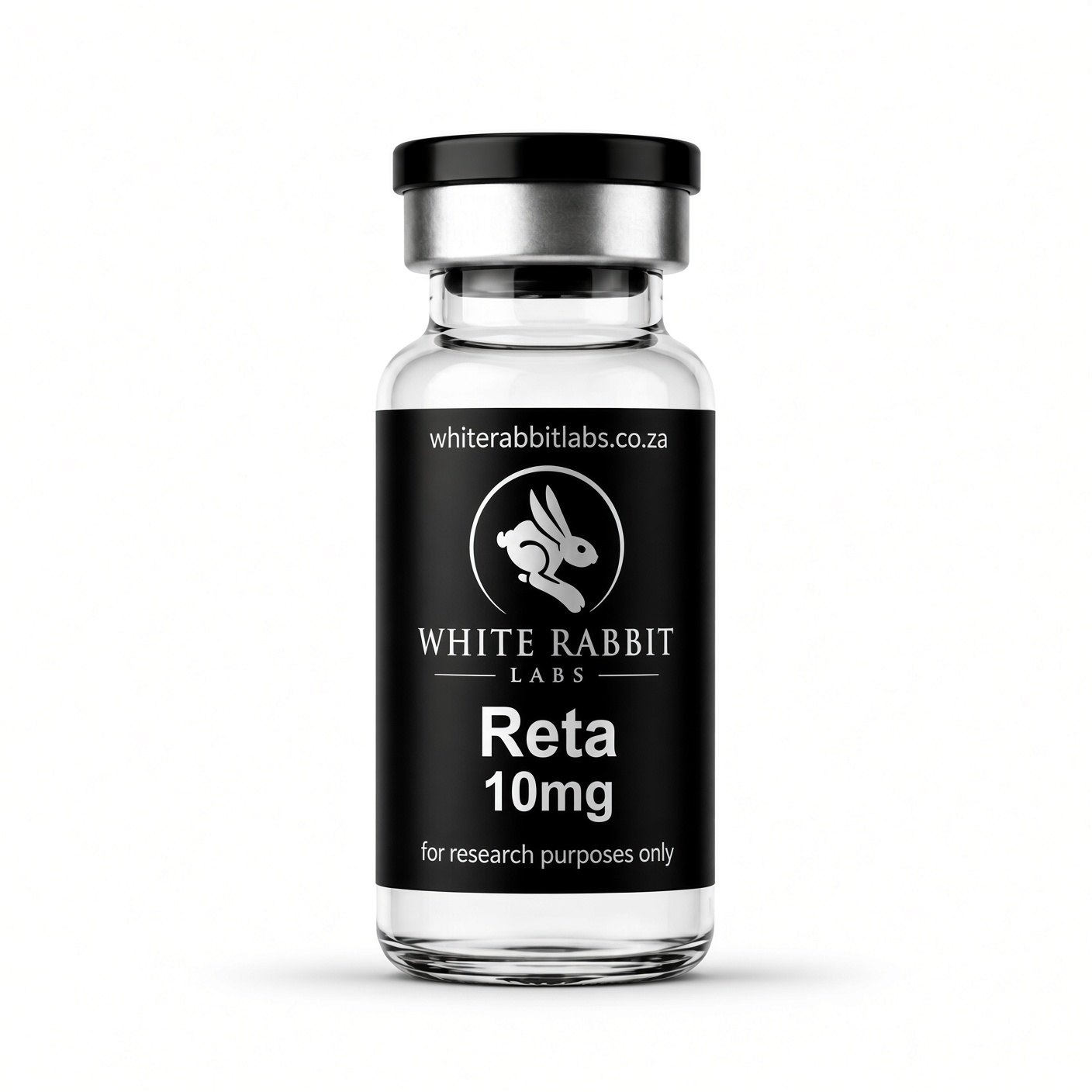
Reta 10mg
1 catalogue entry
Continue exploring
Educational information. Reviewed 3 November 2026. Research catalogue products are not intended for human or animal consumption. No medical advice or cancer-treatment recommendation is provided.